
- Project was granted a R$100 million investment
- Engine will equip a second vehicle model to be made at the industrial site starting in 2015: the Nissan Versa
- Creation of 25 new direct jobs
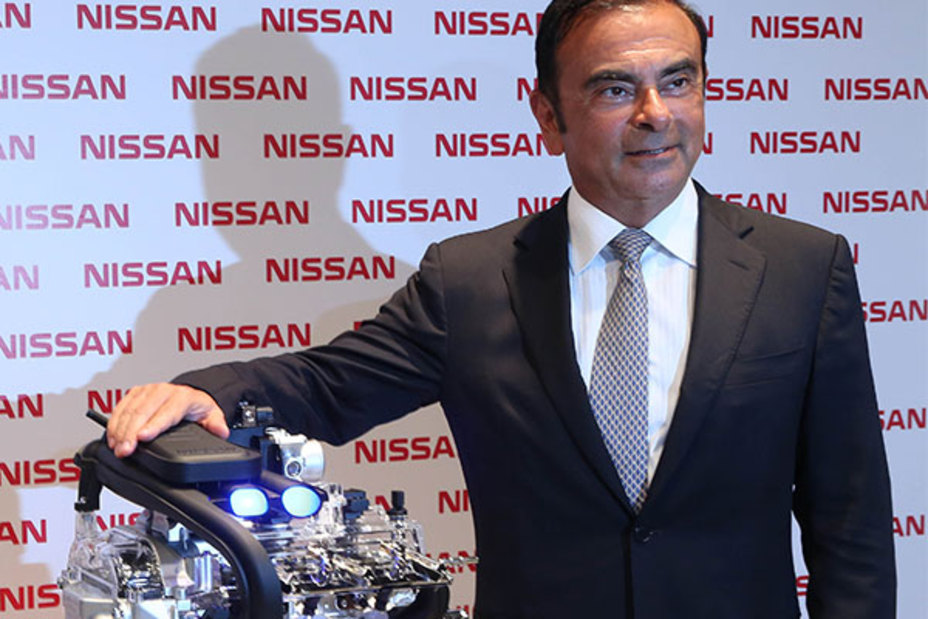
RIO DE JANERIO, Brazil – During a visit to Nissan Brazil's headquarters in downtown Rio, Carlos Ghosn, President and CEO of Nissan Motor Co. Ltd., announced a new and modern 3-cylinder, 1-litre engine will be made at its powertrain plant located at its Resende Industrial Complex in Rio de Janeiro State. The new engine will require a R$100 million investment.
The new 3-cylinder 1-litre engine will share the assembly line with the 1.6-litre engine, which has been produced since Nissan started operations at its Resende Industrial Complex in April 2014. More than 25 professionals have been hired to assemble the new engine, thus enhancing the powertrain unit's headcount of approximately 200 people.
"The production of a new 3-cylinder engine in Brazil demonstrates that Nissan is determined to boost its presence in the domestic market, with modern, innovative products made locally. Therefore, we increased the local content ratio of our products in order to further competitiveness," said Ghosn.
The three-cylinder, 1-litre engine delivers 76 horsepower (approximately 56 kW) and 98 Nm of torque both on gas or ethanol. It will be fitted to the new Nissan New Versa sedan which will be manufactured at the Resende Industrial Plant. The model will share the assembly line with the Nissan March and the March Active. With an aluminium block, four valves per cylinder and high-end technological features, Nissan's new engine has one of the best energy efficiency in Brazil with high performance and low CO2 emissions.
Resende Powertrain Plant
Located at Nissan's Industrial Complex in the Southern Rio de Janeiro State, the Resende Powertrain Plant has the capacity to produce 200,000 engines a year and follows strong guiding principles aimed at sustainable production. For example, the assembly line has cutting-edge electrical equipment to improve operators' well-being while avoiding oil leaks, thus protecting the environment.
Making high-precision equipment requires tough quality controls. As a result, the assembly line has four portals where component quality is checked. One hundred percent of the engines undergo a final operation test, as well as a CO2 emission test; the local industry usually performs sample testing. Everything was made to ensure that Nissan's Brazilian engines offer premium quality.
The local production of engines is part of a comprehensive hub project adopted at Nissan's Industrial Complex in Resende.
Nissan's Industrial Complex in Resende
Totalling investments of R$2.6 billion (US$1.5 billion), operations at the Brazilian Industrial Complex range from a stamping shop to test tracks and includes a body shop, paint shop, plastic injection moulding and paint shop, assembly shop, a powertrain plant, and quality inspection
The Nissan Resende complex produces Nissan's "Platform V" vehicles and engines. The facility employs about 1,500 people and has total capacity to produce 200,000 vehicles and 200,000 engines per year.
The principles of ensuring that Nissan's Industrial Complex in Resende is sustainable and environmentally friendly go beyond improved assembly equipment and advanced processes to the original design of the buildings and the entire infrastructure. The buildings showcase natural illumination and ventilation systems. Production processes also reuse water by filtering solids for recycling or proper disposal.
Outside the walls of the plant, a "green belt" is being planted to surround the entire complex, which will help to reduce both emissions and noise. The belt will reflect the region's natural habitat and occupy an area of more than 12 acres. Nissan also has committed to investing in the preservation of green areas in the region with reforestation in some habitats. The company will create an environmental preserve for the Turfeira Lagoon located next to its industrial complex, which is fundamental to maintaining biodiversity and an ecosystem that's required for the survival of more than 150 species of birds.
About Nissan Motor Co.
Nissan Motor Co., Ltd., Japan's second-largest automotive company, is headquartered in Yokohama, Japan, and is part of the Renault-Nissan Alliance. Operating with more than 244,500 employees globally, Nissan sold almost 5.2 million vehicles and generated revenue of 10.5 trillion yen (USD 105 billion) in fiscal 2013. Nissan delivers a comprehensive range of more than 60 models under the Nissan, Infiniti and Datsun brands. In 2010, Nissan introduced the Nissan LEAF, and continues to lead in zero-emission mobility. The LEAF, the first mass-market, pure-electric vehicle launched globally, is now the best-selling EV in history with almost 50% share of the zero-emission vehicle segment.
For more information on our products, services and commitment to sustainable mobility, visit our website at http://www.nissan-global.com/EN
For more information please visit:
Nissan Australia YouTube: http://www.youtube.com/NissanAustralia
Nissan Australia Facebook: http://www.facebook.com/NissanAustralia
Nissan Australia Twitter: http://www.twitter.com/Nissan_Aus
Nissan Australia Instagram: http://www.instagram.com/NissanAustralia
Nissan Global: http://reports.nissan-global.com/EN/
Nissan Newsroom: http://www.nissan-newsroom.com/EN/
Nissan Channel 23 Blog: http://blog.nissan-global.com/EN/